
Data Security with Data Classification

Ensure data security with data classification to protect your organization’s sensitive data

Data protection is at risk during this pandemic and likely a target of malicious behavior or intrusive cybercriminals. Data classification offers one of the best ways for enterprises to define and assign relative values to their data and ensures data security The process of data classification enables you to categorize your stored data by sensitivity and business effect, so you realize the risks connected with the data. Instead of handling all data the same way, you can manage your data in ways that reflect its value to your business.

Data exists in three primary states, i.e., at rest, in process, and transit. All three states need distinctive technical solutions for data classification. Also, you should apply the same standards of data classification for each. The confidential data needs to stay confidential when at rest, in process, and transit.

Data can be Structured or Unstructured

General classification processes for structured data found in spreadsheets and databases are less complicated and time-consuming to manage.  Unstructured data that include documents, source code, and email are more complex than structured data. Usually, companies have more unstructured data than structured data.

At Sun Technologies, we believe that one of the best data protection aspects is the right data classification. If you know what and where your critical data is, you would secure it reasonably and save your company from possible heavy penalties and compliance breaches. A little while back, we have seen the GDPR compliance violation at H&M with the largest financial penalty following illegal employee surveillance. The company could have avoided the threat if it had followed privacy compliance policies and addressed the data within data classification plans.

Process of Data Classification

  1. Establish a data classification strategy, including goals, workflows, data classification scheme, data owners, and managing data
  2. Figure out the critical information you store
  3. Apply tags by labeling data
  4. Use results to enhance security and compliance
  5. Data is vigorous, and classification is an ongoing process
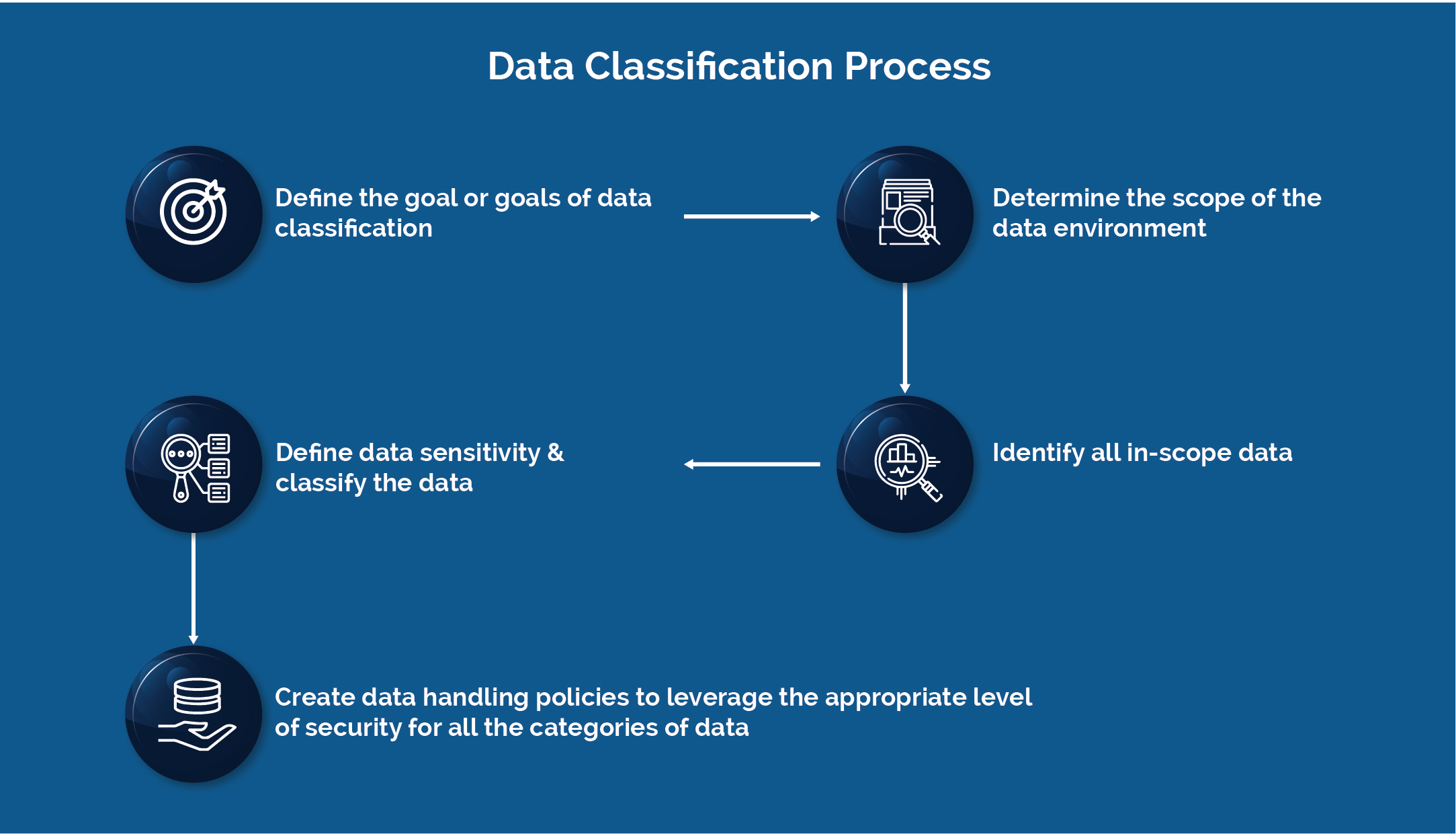
Data classification process

Guidelines to Classify the Data

Enterprises can achieve data discovery through various automated tools that are available in the industry. But most importantly, your enterprise should define the classification scheme and criteria initially. At Sun Technologies, we follow the reliable and demonstrated framework to classify, declassify, and secure sensitive data. The following are some of the steps from our extensive framework.

1. Define the business objective

The initial step is to understand the business objectives and evaluate your enterprise’s risk and compliance needs. Then categorize the ranking of risks and a list of initiatives to reduce the risk. 

2. Understand the requirements and classify data accordingly

At times, it is challenging to meet the compliance needs to meet the critical business requirements. Thus, a reliable data classification program needs to be developed to classify the data according to its risk and value. We have established a dedicated and demonstrated extensive framework by complying with SOX, NIST, CERT, PCI, PII, HIPAA, and many other regulatory requirements. The scheme is a combination of people, process, innovation, and technology, which will find new data elements, shadow IT, structured and unstructured data. And also, it discovers sensitive data in areas you usually never expect. It will identify the broken process, bad actors, data drift, and declassify the data. With that information, We would suggest implementing a sufficient number of DLP tools to secure data-at-rest, data-in-process, and data-in-transit across the IT industry to deliver comprehensive data security. 

3. Categorize, Monitor, Track, and Response

Including a proper incident life cycle management to data classification is vital. It reports the incident occurrences and recommends how to respond to that incident, perform the root cause analysis, etc. Sun Technologies has a fully managed SIEM and SOAR capability, which will get the logs and events from your DLP solutions and associate them with external threat intelligence feeds to give environmental and functional alerts through a dashboard. This enables our SOC team to efficiently detect and resolve attacks of all types by providing compliance status, risk profile and categorized incidents that produce the biggest threat to data.

Benefits of Data Classification

Classifying data helps enterprises ensure regulatory compliance and enhance data security.

Data Security

Classification is an efficient way to safeguard your valuable data. Identify the types of data you store and discover the location of sensitive data, and this makes you to:

  • Prioritize your security measures, revamping your security controls based on data sensitivity
  • Recognize who can access, change or delete data
  • Evaluate risks, such as breaches that impact business, ransomware attack or other threat

Regulatory Compliance

Compliance regulations need enterprises to secure data, such as cardholder information (PCI DSS) or EU residents’ data (GDPR). Classifying data allows you to find the data subject to specific regulations so you can apply them for the required controls and pass audits.

The following defines how data classification can help you meet general compliance standards

  • GDPR— Data classification helps you endorse the rights of data subjects, including satisfying data subject access request by restoring the set of documents with information about a given individual.
  • HIPAA— Knowing where all health records are stored helps you implement security controls for the right data protection.
  • ISO 27001 — Classifying data based on value and sensitivity helps you meet requirements for preventing unauthorized disclosure or modification.
  • NIST SP 800-53— Categorizing data helps federal agencies suitably plan and control their IT systems.
  • PCI DSS— Data classification allows you to find and protect consumer financial information used in payment card

Picture of Vaidyanathan Ganesa Sankaran

Vaidyanathan Ganesa Sankaran

Vaidy is an experienced lead Solutions Architect heading sales and project delivery for Cloud (AWS, Azure), DevOps and legacy Modernization projects with a demonstrated history of working in the information technology and services industry. He is a strong engineering professional with a Master of Science (MS) focused in Computer Software Engineering from BITS Pilani. He has the capability to manage bigger teams and generate revenue through new Sales and Account Mining.

Facebook
Twitter
LinkedIn

Recent Posts

Looking for Data Security Services?

We help you to discover best practices and maximize ROI in data security and protection solutions.

Cloud Data Security Trends

Cloud Data Security Trends

Data is shifting to cloud

Enterprises are increasingly storing a considerable amount of sensitive data in public clouds. But, initiatives to protect that data lag similar to on-premises efforts. Substantial amounts of critical data are not secured enough. Data security is the most crucial factor to consider.

One of the most significant challenges for enterprises is to make sure the data remains secure and tracked as the data travels throughout the cloud environment. Moving to the cloud changes a company’s attack profile; the surface area increases. By adapting both visibility, to figure out sensitive data and automation to enforce policies, enterprises can better reduce threats.

Consider the following to strengthen your data security in cloud computing.

  • Categorize your sensitive data        

  • Implement the least privilege model

  • Audit activity across your environment

  • Use data masking techniques that include encryption

  • Make sure your cloud provider provides an SLA that meets your availability needs

These best practices enable you to achieve data integrity, confidentiality, availability, and data security in the cloud.

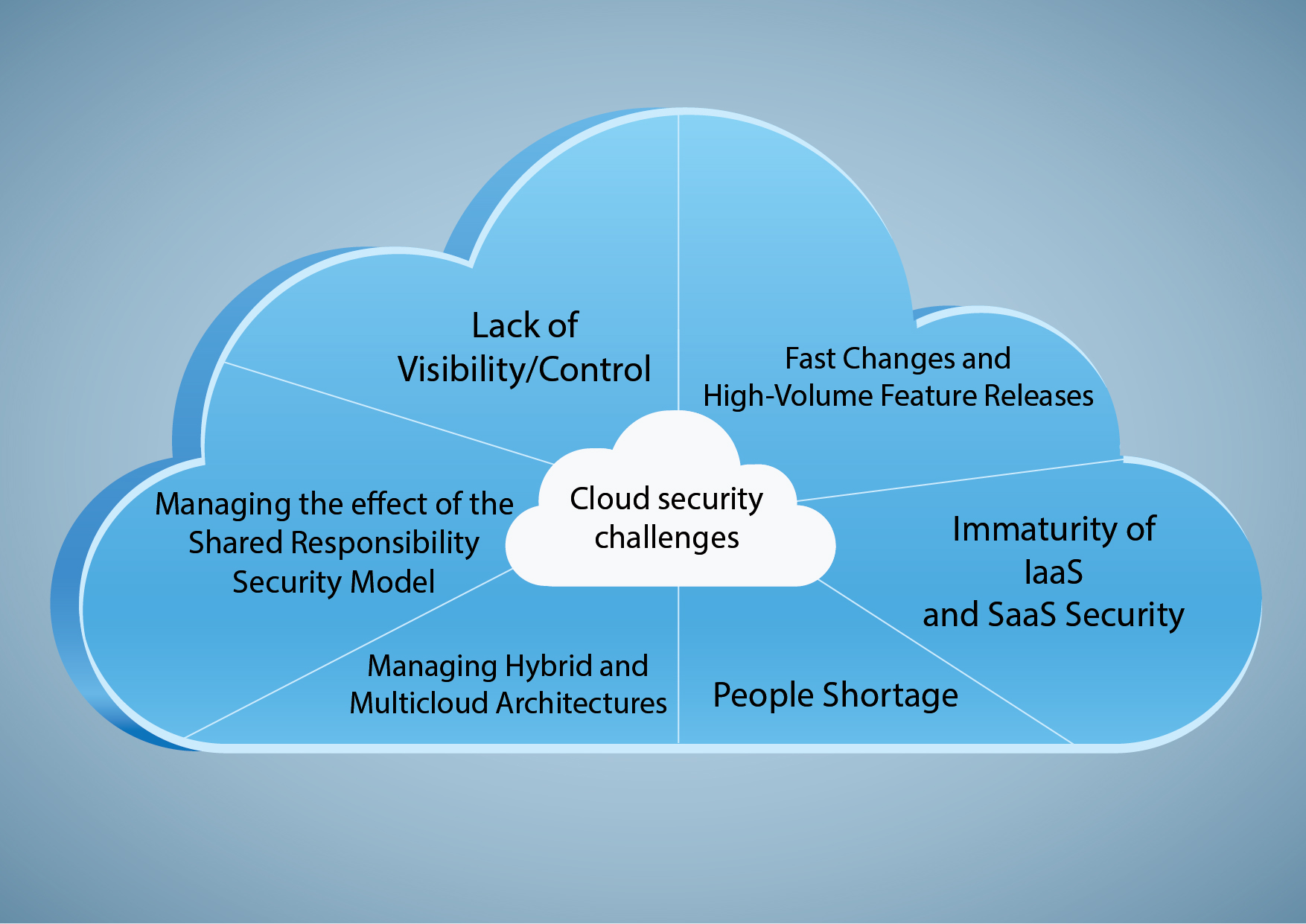
Cloud data security challenges

No wonder the expectations and challenges correlated with securing cloud resident data incorporated a combination of technology, people, and process—with the most significant challenge being employees signing up for cloud applications and services without IT approval.

1.Lack of Visibility/Control

One of the advantages of using cloud-based technologies is that the user does not have to manage the resources required to keep it working (For example, servers). Yet, handling off the responsibility for managing the up-to-date software, platform, or computing resource can result in less visibility and control over that asset.

2.Managing the effect of the Shared Responsibility Security Model

The Cloud Service Provider (CSP) is responsible for protecting its network and infrastructure. Their SecOps team observes the computing, storage, and network hardware composing the cloud platform. As a result, the client is responsible for their data and application security, such as patching and access control problems that arise with working in the cloud. 

3.Fast Changes and High-Volume Feature Releases

CSPs often introduce new features and solutions to attract new customers and keep current customers from defecting. Few of these changes can have massive effects on SecOps. 

4.Immaturity of IaaS and SaaS Security

CSPs make multiple security tools available in their cloud platforms, including cloud-based IDSs and virtual web application firewalls. However, these CSP security offerings subject to be incomplete compared to their conventional data center counterparts. This gap makes SecOps teams having to install and manage their tools.

5.Managing Hybrid and Multicloud Architectures

Few enterprises are 100% in the public cloud. Many companies have data across public, on-premises, and private cloud architectures, and others have applications and data that bridge AWS, Azure, and Google cloud. Such hybrid cloud architecture builds up tricky security dynamic for SecOps to track. It requires many overlapping and redundant systems for various cloud instances. This increases the possibilities of human error and the need for automation further.

6.People Shortage

A shortage of proficient, available, and affordable SecOps workforce is becoming an increasingly urgent issue for almost every security enterprise that’s working in the cloud.

Causes of Data loss associated with public cloud

The growing use of sanctioned and unsanctioned cloud-based applications with security programs for the cloud that are often less mature than present on-premise initiatives has led to a significant loss of corporate data. The main contributors to data loss included violations of security policy, the implications of employees using their own devices, and the lack of adequate access controls.

Enterprises are making investments across various data security disciplines

Enterprises figured out massive enhancements needed to protect sensitive data regardless of location. And 40% of respondents expect cybersecurity spending to increase considerably.

According to McAfee, the organization’s use of cloud solutions grown by 50% between January and April 2020. Simultaneously, external threat actors increased by 630%. The report also focuses on cloud-native security considerations as critical for company workloads operating in the cloud. In response, some tasks should be automated, such as:

  • Configuration management
  • Cloud security administration
  • Other manual processes

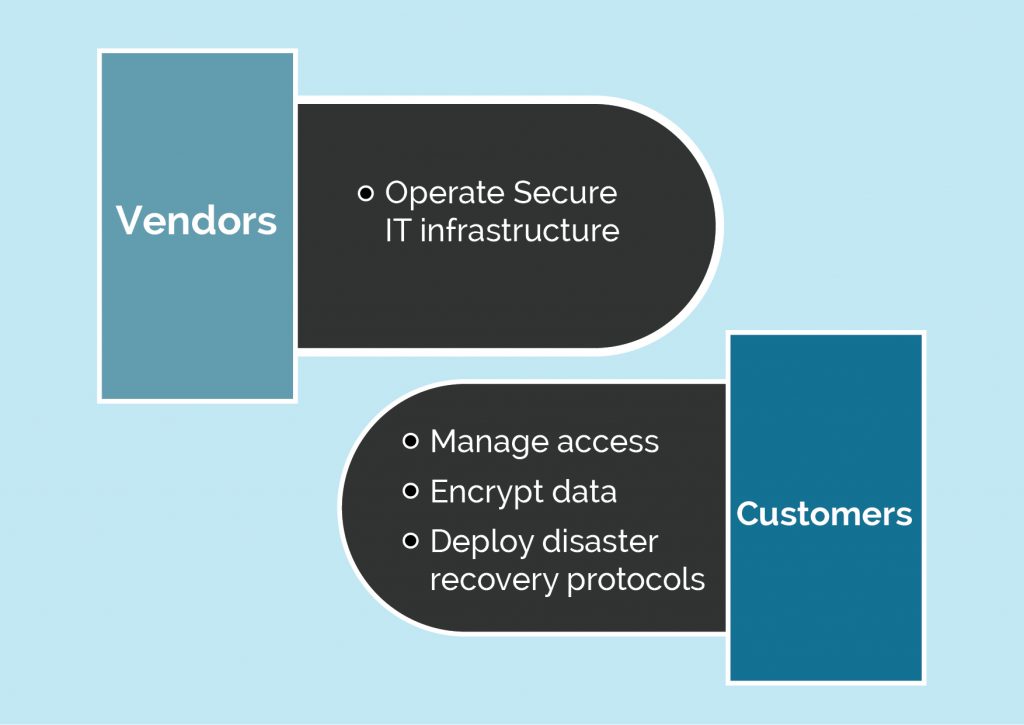
Prediction: Enterprises must carefully realize and follow the shared cloud security responsibility model: vendors are accountable for operating a protected IT infrastructure. Customers are responsible for managing encryption, access, and disaster recovery protocols.

Different teams presently handle cloud and on-premises data security, but most enterprises aim for a unified function

The capability to obtain greater operational efficiencies by unifying security policies across on-premises and cloud-resident data regulate compliance.

Ensuring data confidentiality and data security in the cloud

Ensuring data confidentiality is complex for both maintaining trust in your enterprise and meeting compliance needs. The high-profile breaches consistently in the news highlight the high cost of data security problems. In general, national and international guidelines that include the Health Insurance Portability and Accountability Act (HIPAA) and the General Data Protection Regulation (GDPR) need enterprises to ensure the security and privacy of various critical data types impose including stiff fines for compliance failures.

The most massive threat to data confidentiality is the capability for unauthorized access to sensitive data. There are two methods for dealing with this risk, which can be used together or individually:

 Discover and categorize your data. To ensure the sensitive data is stored only in protected locations and accessible only by authorized users. Also, you need to know which of your information is exposed and the place of the data. Knowing which data needs protection will help you set priorities and apply multiple security controls based on classification outcomes.

Use data masking. This approach involves securing sensitive data by encapsulating it with characters or other data. Data can be hidden in real-time or its original location when requested by an application or a user.

One of the secure and most common data masking approaches is encryption, making it impossible for unauthorized parties to view or realize stored or shared data. Encryption can be asymmetric, which needs a public key and a private key, or symmetric, which utilizes just one private key for encryption and decryption. Actual encryption key management is involved; in general, you must create policies that guarantee only trusted people can access them. Cloud encryption solutions help you to prevent prying eyes from accessing your secured data.

Summary

To summarize, while cloud migration can drive your business growth, any compromise in cloud security can push you down. Passwordless methods are popular nowadays, and they ensure safety, as they are used to hold out against cybercriminals, who try to hack passwords for accessing cloud-based apps. One single method or technology won’t protect your cloud data, but a cluster of multiple technologies can surely complement one another. Enterprises invest heavily in the cloud security workforce, i.e., towards skills, competencies, and governance tools. An organization’s own IT department’s role is indispensable as security and privacy have always been two major checkpoints in adopting cloud.

Picture of Tahir Imran

Tahir Imran

With over 18+ years of experience in Software design and development, Tahir's expertise lies in designing and developing high-quality products and solutions spanning multiple domains. He is versatile and always eager to tackle new problems by constantly researching and deploying emerging techniques, technologies, and applications.

Facebook
Twitter
LinkedIn

Recent Posts

Need  Expert Help?

Have a reputable and trustable managed security services provider assess your data storage and security requirements today.

Providing Test automation framework using UFT for one of the top-tier insurance company in US

Case Study

Providing Test automation framework using UFT for one of the top-tier insurance company in US

Whom we worked with

A top-tier insurance company that offers financial products and services including life insurance, annuities, mutual funds, disability income insurance, credit union products, retirement planning, and more.

Our Solution

  • Designed a UFT automation framework that would capture the load time
  • Developed a parser to verify the logs within a fraction of seconds
  • A dedicated reusable component as part of the UFT automation framework to validate the status of Windows and Linux based services
  • Designed an approach to execute 300+ test cases in multiple virtual machines running simultaneously in a hidden mode without any hassles

Challenges

  • No enhanced framework to capture the performance metric of an application for each page
  • Replacing monotonous procedure to verify logs
  • To check the status of Windows and Linux based services
  • Execution of 300+ test cases within 1 ½ hour

Impact

  • Capturing performance metrics without integrating any of the performance tools helped to save 100% cost on license based tools
  • Reduced 90% amount of human efforts to verify logs and checking status of services
  • Minimized the need for human resources by 35% to execute test cases and ensured full support from QA automation team
  • Automated execution of Test automation in virtual machines by reducing manual effort to execute Automated testing by about 1-2 hours every execution.
  • Notified IT contacts along with IT asset owners on found application issues on a daily basis with detailed bug analysis

How we helped

  • Sun Technologies Automation team analyzed the requirement at the forefront and converted analysis into an advance and enhanced UFT automation framework that would capture the load time of each page and designed metrics in detail by referencing load time through automation scripts.
  • The developed UFT automation framework captures load time of 35+ web pages and it does not involve the integration of any license based performance tools and helped to save 100% cost
  • Developed a parser (automation script) which is fast, accurate to check and verify the logs contain any specific error statements within a fraction of second
  • With the usage of the parser, seamlessly verifying the logs for 20+ servers with accurate and detailed result report, which reduced 90% manual resource effort
  • Designed reusable components as part of the UFT automation framework to validate the status of Windows and Linux based services
  • Using reusable component, validating for Windows and Linux based services for 40+ servers
  • Designed an approach and configured setting in registry edit to execute 300+ test cases in multiple virtual machines running simultaneously in hidden mode ensuring no machine getting locked and overall reduced consumption of 1-2 hours of manual effort

Contact Your Solutions Consultant!

Test Automation for a leading Financial Institute using Java with Selenium

Case Study

Test Automation for a leading Financial Institute using Java with Selenium

Whom we worked with

A Leading Financial Institution in New York State. It is a Federally-chartered wholesale bank providing a reliable source of liquidity to financial institutions

Our Solution

  • Cucumber Selenium BDD framework to accommodate vast test cases of 30 + web applications
  • Used the Spring to easily accommodate database validation after each CRUD operation
  • Created Master traceability which contains Manual , Automation, and performance test case
  • Created an automation dashboard to execute selenium scripts from UI. Also, the automation dashboard provides detailed information about each application within the BANK
  • Configured Jenkins to trigger the smoke test cases after every new deployment and notify the users via email after the completion of execution.
  • Implemented automated test data generator

Challenges

  • Regression testing for more than 30+ SQE Bank applications
  • Database validation for CRUD, Search and Audit details and transaction
  • To run the smoke and regression test cases after every enhancement of the applications or defect fixes

Impact

  • Reduced manual Effort
  • Reduced Testing Cycle Time
  • Improved productivity of the application
  • Automation dashboard made easy to execute selenium scripts for clients

How we helped

  • We developed a cucumber selenium hybrid framework using spring, Gradle, and TestNG which was easy to develop, maintain and execute the scripts which in turn reduced about 80% of execution time
  • We created a well-defined user interface to control the execution using JSP which hosted in the tomcat server. This was accessible across the Bank
  • We created Jenkins Job to trigger selenium scripts and notify users with a build verification report.
  •  We developed the library to compare all XML files and create a comparison report which reduced 95% of execution time on the XML file comparison suite
  • We enhanced the framework to validate API using rest assured

Contact Your Solutions Consultant!

Sun Technologies’ Test Automation Framework Improved a US Furniture Retailer’s App Performance by 42%

Case Study

Sun Technologies' Test Automation Framework Improved a US Furniture Retailer's App Performance by 42%

Whom we worked with

The Client is an Omni-channel retailer of furniture products headquartered in Atlanta, Georgia, and has over 100 brick and mortar stores across 16 states in the USA.

Our Solution

  • Evaluated various open source and licensed tools and picked the right tools for the test solutions
  • Identified a minimal number of end to end scenario with maximum test coverage
  • Designed and Developed a Hybrid Selenium framework to tailor it to the client’s e-commerce and sales applications
  • Accelerated knowledge transition
  • Quick ramp up and ramp down of resources
  • Perfectly synchronized on-site/offshore set up
  • High Test Coverage
  • Continuous Process improvements
  • Comprehensive reusable test cases

Challenges

  • Insufficient regression testing coverage using a manual approach
  • No Dedicated QA automation team and hence no QA process followed by client
  • The client was using an eCommerce platform built on legacy technology and had several internal functionality gaps due to which it failed to complete the online orders successfully

Impact

  • Reduced testing life cycle time
  • Increased test coverage to 100%.
  • Record time product releases.
  • Test automation resulted in regression run test reduction from 20 hours to 4 hours
  • Ensured that quality is engineered into the application right from the beginning of the development cycle. This strategic shift resulted in early detection of up to 70% of the defects in the SDLC, leading to a 35% improvement in the application’s quality. We enabled 100% traceability to facilitate both backward and forward tracing of requirements through defects and vice versa

How we helped

  • Assessed the requirements, tools, and processes involving automated testing for their applications and presented a high-level test plan
  • Our test automation framework countered the lack of automation in the sprint cycles
  • Over 282 test automation scripts developed so far for component-level testing, we implemented the shift-left approach for performance testing the web application
  • Implemented Test automation for regression run tests.
  • Ability to run test automation scripts with just one click (using a batch file)
  • The performance engineering approach of our testers made sure that quality is engineered into the application right from the beginning of the development cycle.
  • Provided a Dashboard/Web UI to control all the aspects of test automation like selecting environment, application, test cases, test data set, and so on

Contact Your Solutions Consultant!

Acceptance Testing

Customer satisfaction – Guaranteed!! Check how we perform Acceptance testing…

Our Expertise in Acceptance Testing

Acceptance Testing Services

Sun Technologies’ rigorous testing process and deep domain knowledge ensures application system meets the User Acceptance Criteria defined by the Business Analysts/Users and is ready for production.

Fuel up your business with our cost-effective and high-quality User Acceptance Testing services

Sun Technologies User Acceptance Testing Services help our customers gain positive results by blending our expertise in the product, domain, testing, and automation skills. We provide cost-effective and efficient quality assurance services for your implemented software systems.

Our professional QA analysts verify and validate your systems whether it has met the user requirements and business processes in a dynamic UAT environment by applying the best and most excellent advanced testing tools and methods.

Our Acceptance Testing
Best Practices
  • Improves client satisfaction as our UAT services give confidence that the software will meet the accepted scope
  • Assures quality and brand reputation
  • Reduce unnecessary cost during testing processes

Our User Acceptance Testing Services Approach

Project Charter

Our planning phase includes a project requirements report, process execution diagrams, a Business Requirements Document (BRD), and System Requirements Specification (SRS) validated during the testing process.

Test Plan Creation

A solid user acceptance test plan outlines the strategy used to verify that a system meets the business needs, documenting all test cases, testing timelines, and entry & exit criteria.

Test Cases Identification

Use business use cases to enhance the accuracy of our test cases and to achieve extended coverage.

Test Data Preparation

Write functional test cases & identifies test data

Test Case Execution and Recording Results

We use appropriate tools for execution, defect management, and documentation of tests.

Business Objective Confirmation

Getting Formal sign-off from users based on the End to End reporting of UAT

How We Work With You

Requirement Analysis

Build Robust Test Strategy

Automated Validation

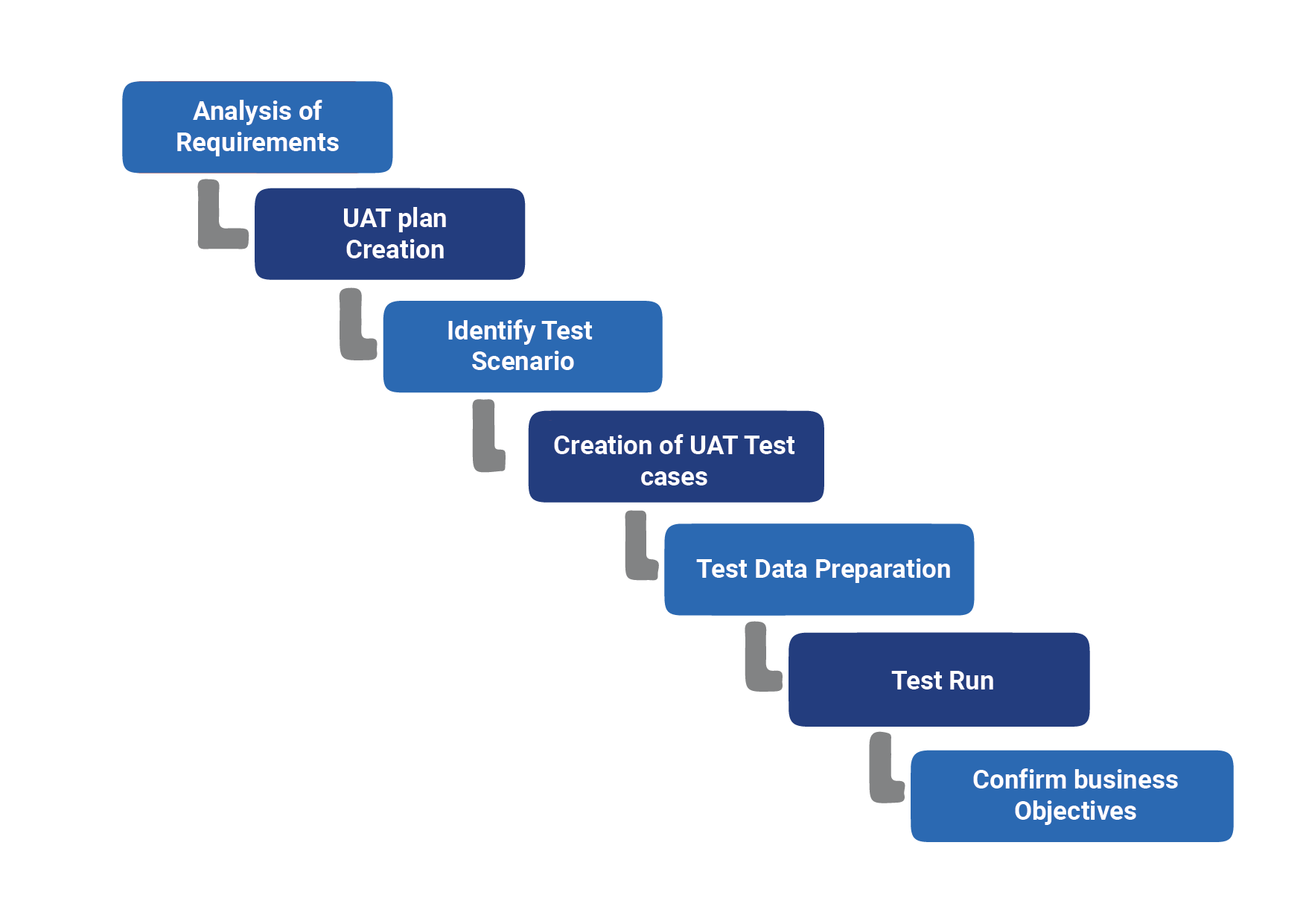
Sun Technologies’ Acceptance Testing Process covers the below phases

  1. Business Requirement Analysis
  2. Acceptance Testing Test Plan Creation
  3. Test Cases Identification
  4. Test Data Preparation
  5. Test Case Execution and Recording Results
  6. Business Objectives Confirmation

Our Key Principles of Acceptance Testing

Usability

Flexibility and efficiency of use

Deliver comprehensive content and visually pleasant graphics

Apply necessary screen resolutions and consider various browsers design

Performance

Complete analysis and recommendations for performance improvements

Determining the most cost-effective way to improve the performance

Help users to have software product with high responsiveness, availability, and scalability

Compliance

Deliver product meeting acceptance criteria

Share End-to-End testing documentation

Robust

Increase compatibility with existing and future technologies

Ensuring the system functions correctly in stressful environmental conditions

Robust Software Testing Life Cycle (STLC) to fit your testing requirements

Our Tool Expertise

Why Sun Technologies for Acceptance Testing Services?


Case studies

Case studies

Cloud Testing Services

Sun Technologies’ experts can develop a secure comprehensive testing strategy to test applications in the cloud

Cloud Projects

Cloud Testing Services

Sun Technologies’ scalable and dependable cloud-based QA services help organizations reduce costs, become more agile and adhere to CMMi standards.

Ensuring high quality throughout all directions of cloud implementation

We have seen an exponential growth in cloud implementation over the last 5 years and our team has helped several companies to transition from On-Prem systems to the cloud. Sun Technologies has consulted and implemented various cloud projects for our clients during this period.

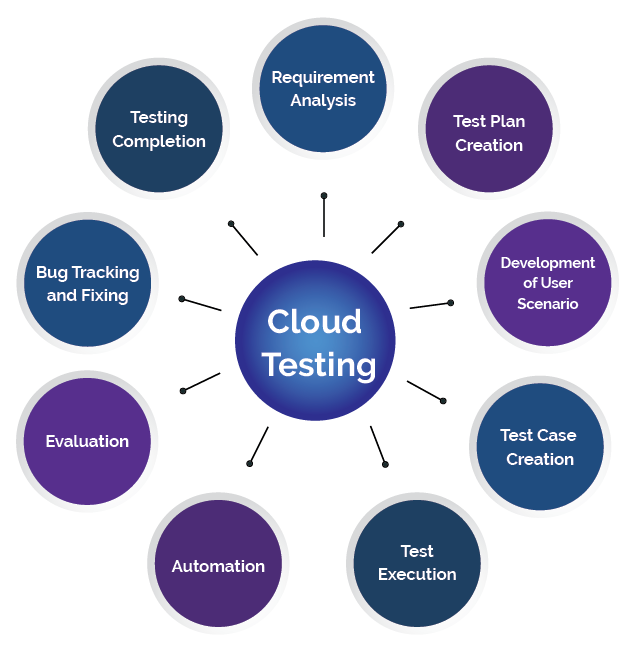
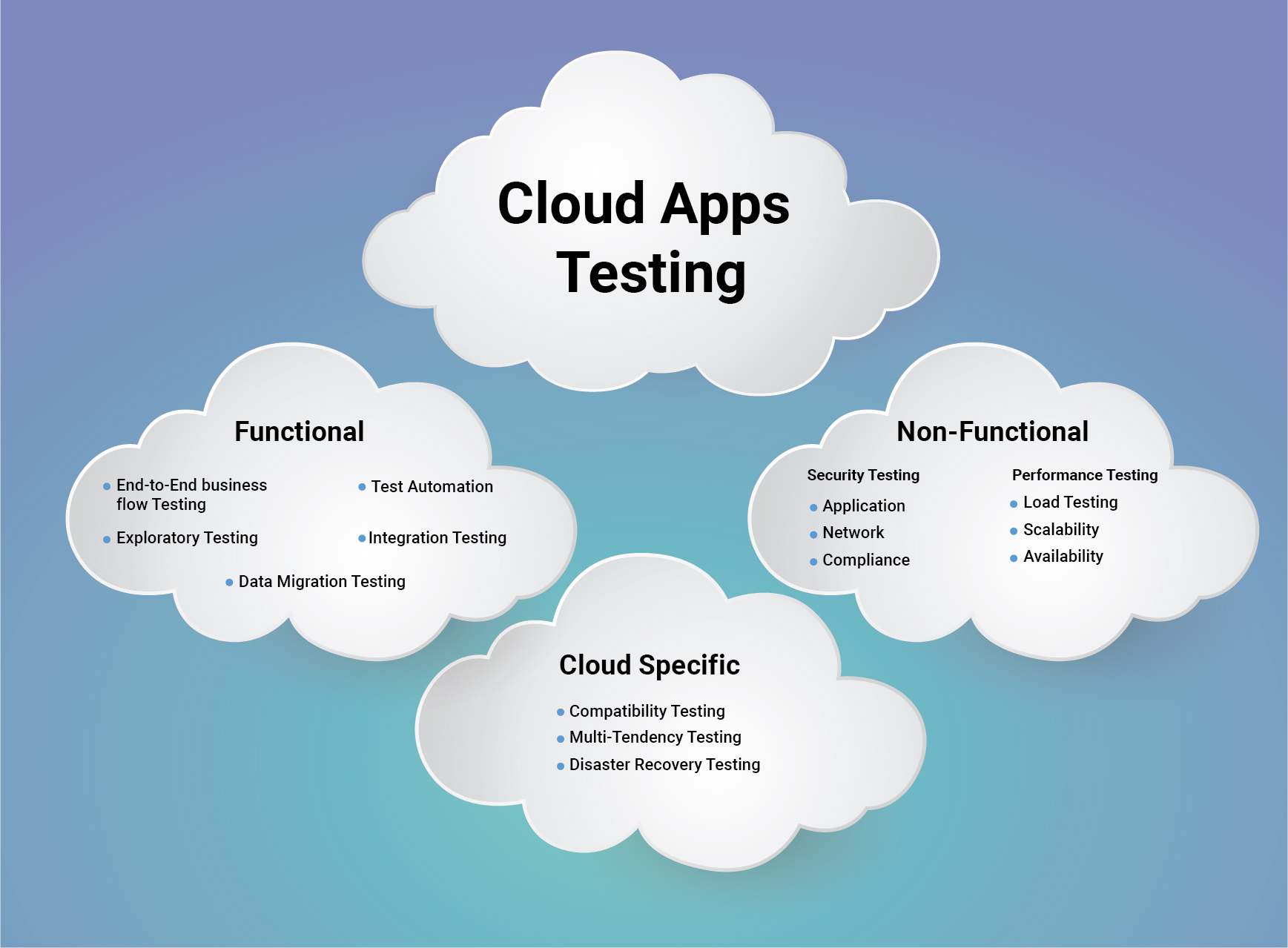
Cloud transitions require intensive Functional and Performance Testing of applications and systems (On-Prem vs Cloud Comparative Testing). Our cloud testing methodology involves active development of automated Continuous Testing as part of the DevOps pipeline. Cloud Testing involves the use of cloud infrastructure to carry out software testing.

Cloud testing process

Our Cloud Testing Approach

Sun Technologies’ cloud testing involves leveraging multiple tools (a blend of OpenSource and Licensed test tools) to enhance our test services to ensure seamless remote Testing and coverage to all testing levels. We perform an appropriate combination of checks based on the requirements of the project.

Discover

We analyze and understand the project completely to identify the need for cloud testing and prepare discovery reports.

Develop Test Scenarios

Our test engineers create test scenarios that include the controls such as activity monitoring, tokenization, encryption, and malware detection.

Monitor

We perform audits & measure the efficiency of cloud testing. Tester’s productivity is measured regularly.

How We Work With You

Requirement Analysis

Automation

Informative Analytics

Enhances Performance

Our Cloud Testing Services​

cloud testing services

Our Key Principles of Cloud Testing services

Risk-free production deployments

Improved Scalability

Expanded Durability

Efficiency

Shift-left Quality


Projects
0 +
Years of Experience
0 +
Experts
0 +

Our Tool Expertise

Why Sun Technologies for Cloud Testing Services?


Case studies

Case studies